Neuroradiology Services in Whitefield, Bengaluru
Neuroradiology Services in Whitefield, Bengaluru
Accurate diagnosis is one of the most important steps in treating neurological conditions. Neuroradiology is a specialized field that uses advanced imaging techniques to evaluate disorders affecting the brain, spine, head, neck, and nervous system. At Ragav’s Brain and Spine, we provide neuroradiology services in Whitefield, Bengaluru, helping patients receive timely and accurate diagnosis for a wide range of neurological conditions.
In short, neuroradiology uses imaging techniques such as MRI and CT scans to accurately diagnose and monitor conditions affecting the brain, spine, and nervous system, forming the basis for safe and effective treatment planning.
Our neuroradiology services are led by Dr. Amrutha Ranganath, who works closely with neurologists, neurosurgeons, and rehabilitation specialists to support patient care.
We serve patients from Whitefield, Hoodi, Kadugodi, Pattandur Agrahara, and surrounding areas.
What Is Neuroradiology?
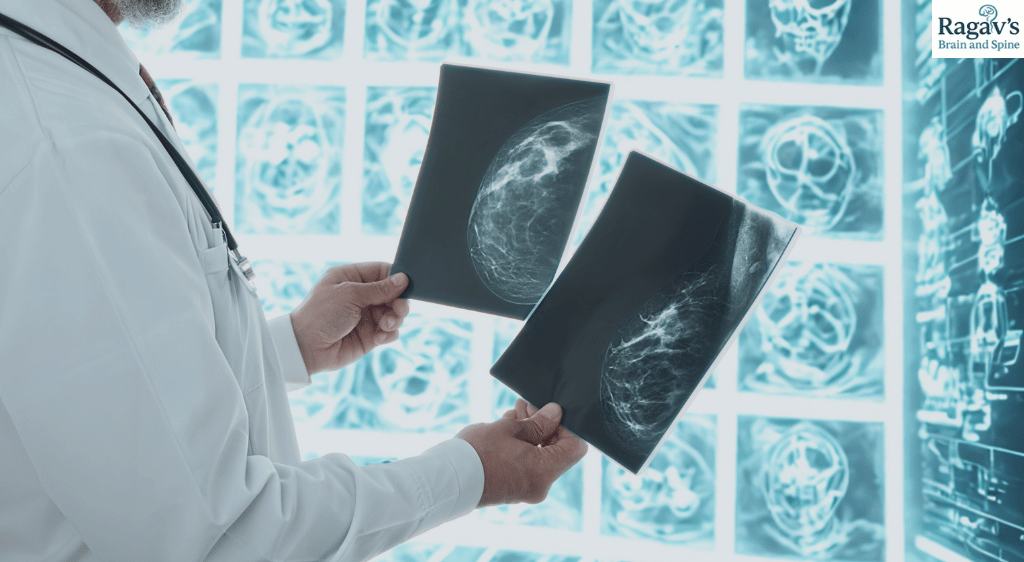
Neuroradiology is a medical specialty focused on interpreting imaging studies of the brain, spine, spinal cord, nerves, and blood vessels of the nervous system. These imaging studies help doctors identify abnormalities, diagnose conditions, plan treatments, and monitor recovery.
Advanced imaging plays a key role in diagnosing neurological disorders at an early stage, often before symptoms become severe.
Conditions Evaluated Through Neuroradiology
Neuroradiology helps diagnose and monitor a variety of neurological conditions, including:
- Stroke
- Brain tumors
- Spine disorders
- Head injuries
- Brain hemorrhage
- Epilepsy
- Multiple sclerosis
- Spinal cord disorders
- Neurovascular conditions
- Congenital neurological abnormalities
Imaging findings often guide treatment decisions and help specialists choose the most appropriate course of care.
When Might You Need Neuroradiology?
Your doctor may recommend neurological imaging if you experience symptoms such as:
- Persistent headaches
- Seizures
- Dizziness or balance problems
- Sudden weakness or numbness
- Neck pain or back pain with nerve symptoms
- Vision disturbances
- Memory or cognitive changes
- Suspected stroke
- Head or spinal injuries
Prompt evaluation can help identify serious conditions and allow treatment to begin as early as possible.
Common Imaging Studies Used in Neuroradiology
Neuroradiologists interpret several types of imaging studies depending on the patient’s condition.
These may include MRI scans, CT scans, MR angiography, CT angiography, and specialized imaging of the brain and spine.
Each imaging method provides different information and helps doctors understand the structure and function of the nervous system.
How Neuroradiology Supports Treatment Planning
Many neurological conditions require detailed imaging before treatment decisions can be made. Neuroradiology helps specialists:
- Confirm a diagnosis
- Identify the exact location of a problem
- Assess the severity of a condition
- Plan surgical procedures
- Monitor treatment progress
- Evaluate recovery after treatment
Accurate imaging often helps avoid unnecessary procedures and supports better clinical decision-making.
Neuroradiology and Brain & Spine Care
At Ragav’s Brain and Spine, neuroradiology plays an important role in supporting services such as neurosurgery, neurology, stroke care, neurophysiotherapy, and rehabilitation.
Patients undergoing evaluation for brain tumors, epilepsy, spinal disorders, movement disorders, or neurological injuries often require detailed imaging as part of their treatment journey.
This coordinated approach allows specialists to work together and provide timely care based on accurate diagnostic information.
When Should You Seek Specialist Evaluation?
Symptoms affecting the brain, nerves, or spine should not be ignored. Persistent headaches, unexplained weakness, seizures, balance problems, or nerve-related symptoms may require further investigation through specialized imaging.
Early diagnosis can often lead to more effective treatment and better long-term outcomes.
Frequently Asked Questions
What is the difference between neurology and neuroradiology?
Neurology focuses on diagnosing and managing conditions of the brain and nervous system through clinical examination, while neuroradiology specifically interprets imaging studies such as MRI and CT scans to support that diagnosis. The two specialties typically work together on the same case.
Do I need a doctor’s referral for a neuroradiology scan?
In most cases, imaging is arranged following an assessment by a neurologist, neurosurgeon, or another treating doctor, since the type of scan needed depends on the specific symptoms and suspected condition.
Is an MRI or CT scan better for diagnosing a neurological problem?
This depends on the condition being evaluated. MRI generally provides more detailed images of soft tissue such as the brain and spinal cord, while CT scans are often faster and more suitable for certain urgent situations such as suspected bleeding. The appropriate scan is chosen based on the clinical picture.
How long does it take to get neuroradiology results?
This varies depending on the complexity of the scan and the urgency of the case, though results for urgent or emergency evaluations are typically prioritised and reviewed promptly.
Is neuroradiology only used before surgery?
No. While neuroradiology is often used to plan surgical procedures, it is also used for initial diagnosis, monitoring disease progression, and evaluating recovery after treatment, regardless of whether surgery is involved.
Book a Neuroradiology Consultation in Whitefield
If you have been advised to undergo neurological imaging or need an evaluation for a brain, spine, or nerve-related condition, contact Ragav’s Brain and Spine to schedule a consultation in Whitefield, Bengaluru.
Our team provides neuroradiology, neurology, neurosurgery, neurophysiotherapy, and rehabilitation services for patients across Whitefield, Hoodi, Kadugodi, Pattandur Agrahara, and nearby communities.