A stroke changes things quickly, and the days after diagnosis are often the hardest. Families are told what happened medically, but not always what happens next: how movement comes back, what daily life looks like in the weeks ahead, or who helps guide that process. If you or someone you love is facing this right now, the most useful next question isn’t “what caused this,” it’s “what do we do from here.” That is where neuro physiotherapy comes in.
What Stroke Rehabilitation Actually Involves
Stroke rehabilitation is not a single treatment; it is a structured, ongoing process built around the specific ways the stroke has affected a person’s movement, balance, speech, or coordination. No two patients recover the same way, because no two strokes affect the brain identically.
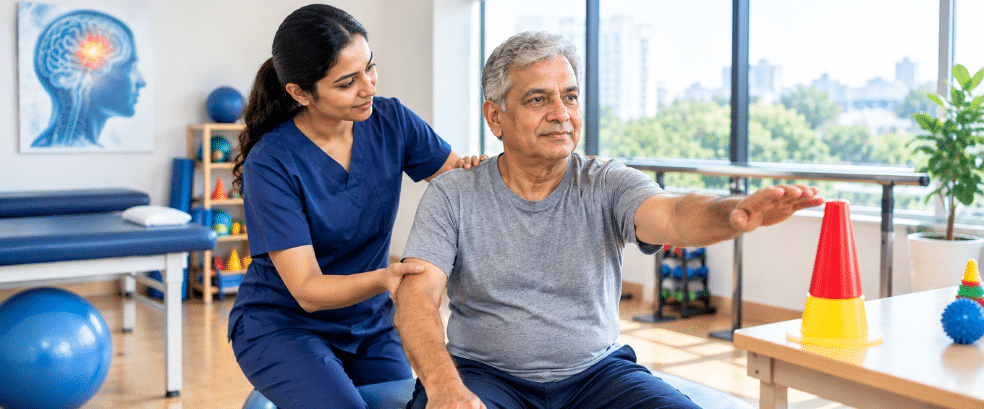
A neuro physiotherapist works alongside the patient (and often the neurologist and family) to build a plan around what the patient can currently do, what needs support, and what functional goals matter most to them: walking again, regaining strength on one side, improving balance, or simply moving safely around the home.
Why “Near Me” Matters More Than It Seems
Searching for a neuro physiotherapist near me isn’t just about convenience. Stroke recovery often requires frequent visits, especially in the early stages, and travel time can genuinely affect whether a patient sticks with their program. A clinic that is easy to reach from home makes consistency easier, and consistency is one of the few things that reliably supports progress in rehabilitation.
How a Neuro Physiotherapist Supports Recovery After Stroke
Depending on the individual case, stroke physiotherapy can include:
- Gait training and balance work, to help patients relearn safe, stable movement
- Therapeutic exercise and resistance training, tailored to the affected muscle groups
- Neural mobilization techniques, aimed at supporting nerve function and reducing stiffness
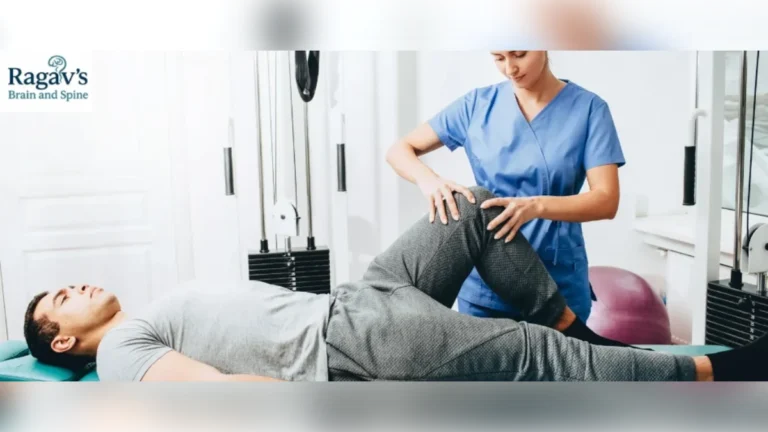
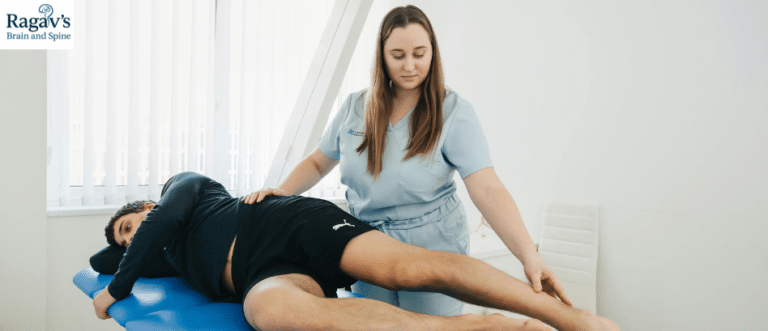
- Manual therapy, to address tightness or compensatory patterns that develop after a stroke
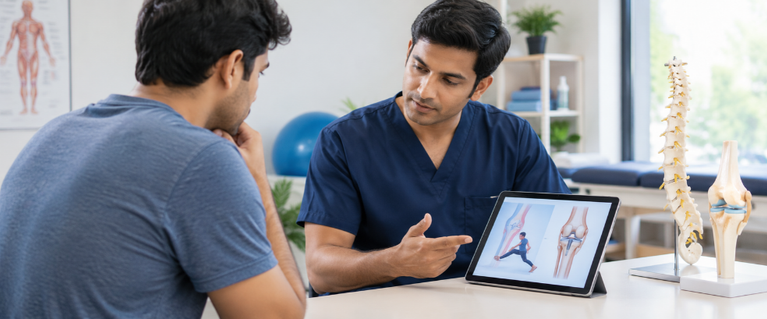
- Patient and family education, so that safe movement habits carry over into daily life at home
The exact combination, and how quickly a patient progresses through it, varies depending on the individual case. Your physiotherapist will map out a personalised plan during your initial assessment rather than applying a fixed protocol to everyone.
What Makes Rehabilitation at Ragav’s Brain and Spine Different
Rehabilitation works best when it is not treated as a generic checklist. At Ragav’s Brain and Spine, the physiotherapy team builds each program around the patient’s actual goals and current abilities, combining hands-on therapy with targeted exercise and ongoing patient education rather than relying on one method alone.
Dr. Lakhi Shaw, the clinic’s Neuro Physiotherapist, brings clinical experience from hospitals and rehabilitation centres including RXDX SportsMed, Sagar Hospital, and KEMDAS Hospital, along with advanced training in neural mobilization, spine manual therapy, and myofascial release. This background supports a rehabilitation approach that looks beyond a single symptom and considers how neurological, musculoskeletal, and post-operative factors interact, which matters for stroke patients who are often dealing with more than one of these at once.
Because the clinic operates within Ragav’s Brain and Spine, physiotherapy also sits close to neurology and neurosurgery services, which can help keep communication clear when a patient’s recovery involves more than one specialist.
What to Expect When You Begin Stroke Physiotherapy
The first session typically focuses on assessment: understanding what the stroke has affected, what movement currently looks like, and what the patient’s priorities are. From there, a plan is built collaboratively, with realistic milestones rather than fixed timelines, since recovery speed varies from person to person.
Ongoing sessions build on that plan, adjusting as strength, balance, or coordination improve. Consistent support and patient education are treated as part of the therapy itself, not an afterthought, since safe movement habits at home are often what protect the progress made in clinic.
Getting Started
If you or a family member is looking for a neuro physiotherapist in Whitefield, Bengaluru to support recovery after a stroke, the team at Ragav’s Brain and Spine is available to talk through where to begin.
Ragav’s Brain and Spine 5, Docube Healthcare, 2nd Floor, Keerthi Surya Shakti Towers, ITPL Main Road, near Hoodi Circle, Whitefield, Bengaluru, Karnataka 560048
Phone: 94447 02299 WhatsApp: Book Now
Hours: Monday to Saturday, 9:00 AM to 9:00 PM
Frequently Asked Questions
1. Can physiotherapy actually help after a stroke, or is it just for mild cases?
Physiotherapy can be a meaningful part of recovery across a range of stroke severities. The specific approach and expected progress depend on the individual case, which is why an initial assessment is the right starting point.
2. How soon after a stroke should physiotherapy begin?
This depends on the patient’s medical status and clearance from their treating doctor. It’s best discussed directly with your neurologist and physiotherapist, since timing varies from person to person.
3. Is neuro physiotherapy different from regular physiotherapy?
Yes. Neuro physiotherapy focuses specifically on conditions affecting the brain, spinal cord, and nervous system, such as stroke, and uses techniques suited to relearning movement and coordination rather than general musculoskeletal recovery alone.
4. Do you offer physiotherapy at home for stroke patients who can’t travel easily?
Home physiotherapy options exist for patients who find it difficult to travel to the clinic. It’s best to call and discuss your specific situation so the team can advise what fits.
5. How do I find a good neuro physiotherapist near me for stroke recovery?
Look for a physiotherapist with specific training and clinical experience in neurological rehabilitation, not just general physiotherapy, and a clinic that can coordinate with neurology or neurosurgery if needed.
6. What should I bring to the first physiotherapy session after a stroke?
Bringing any recent medical reports, scan results, or discharge summaries from the hospital helps the physiotherapist understand the case fully during the initial assessment.