Slip Disc Physiotherapy Treatment in Whitefield, Bengaluru
Non-Surgical Relief for Slip Disc Pain
A slip disc can cause significant back pain and may affect your ability to sit, walk, bend, or perform routine activities comfortably. In some cases, the condition can also lead to leg pain, numbness, or weakness due to pressure on nearby nerves. At Ragav’s Brain and Spine, we provide slip disc treatment in Whitefield, Bengaluru through physiotherapy, pain management, neurological evaluation, and surgical care when required.
Our goal is to relieve pain, restore movement, and help patients return to their daily activities as safely and quickly as possible.
We serve patients from Whitefield, Hoodi, Kadugodi, Pattandur Agrahara, and surrounding areas.
What Is a Slip Disc?
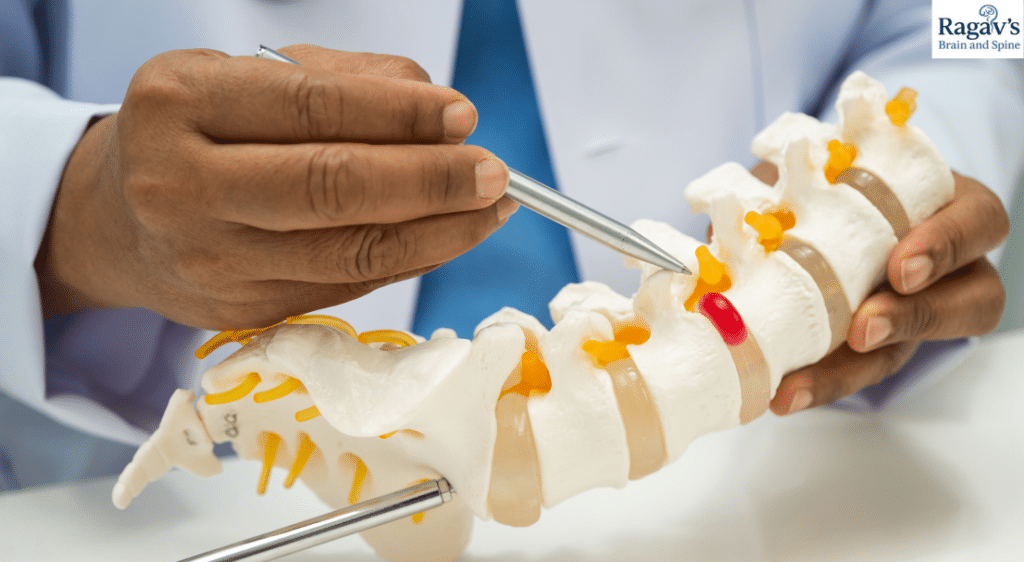
A slip disc, also known as a herniated disc or prolapsed disc, occurs when the soft inner portion of a spinal disc pushes through its outer layer. This can irritate or compress nearby nerves, leading to pain and other symptoms.
Slip discs can occur in different parts of the spine, although they are most commonly seen in the lower back and neck.
Not every slip disc causes symptoms. However, when nerves become affected, patients may experience pain that interferes with daily life.
What Causes a Slip Disc?
A slipped disc may develop due to age-related wear and tear, heavy lifting, sudden twisting movements, poor posture, repetitive strain, or spinal injuries.
People who spend long hours sitting, perform physically demanding work, or have weak core muscles may be at a higher risk of developing disc-related problems.
Common Symptoms of a Slip Disc
Symptoms depend on the location and severity of the disc problem. Many patients experience lower back pain that may gradually worsen with movement or prolonged sitting.
When a nerve is compressed, symptoms may include pain that travels into the leg or arm, numbness, tingling sensations, muscle weakness, or difficulty performing certain movements.
Some patients may only experience mild discomfort, while others may find everyday activities increasingly difficult.
How Is a Slip Disc Diagnosed?
Diagnosis begins with a detailed clinical assessment and physical examination. Your specialist will evaluate your symptoms, spinal movement, muscle strength, reflexes, and nerve function.
Imaging studies such as MRI scans may be recommended when a detailed view of the spine is needed. This helps identify the location of the disc problem and guides treatment decisions.
Physiotherapy for Slip Disc
Many patients with a slipped disc improve without surgery. Physiotherapy is often one of the first treatment options recommended to reduce pain and improve spinal function.
Treatment may include manual therapy, stretching exercises, strengthening exercises, posture correction, core stabilization training, electrotherapy, and movement education. The aim is to reduce pressure on the affected area while improving spinal support and flexibility.
A structured rehabilitation program can also help lower the risk of future episodes.
When Is Surgery Needed?
Most slip disc cases can be managed with conservative treatment. However, surgery may be considered if symptoms continue despite treatment, nerve compression becomes severe, or weakness develops in the arms or legs.
At Ragav’s Brain and Spine, patients have access to advanced spine care, including minimally invasive and endoscopic spine surgery when appropriate.
The decision to proceed with surgery is based on symptoms, imaging findings, and the impact on daily life.
Don’t Ignore Persistent Back or Leg Pain
Many people continue to manage symptoms with temporary pain relief while the underlying problem progresses. Delayed treatment may lead to prolonged discomfort and, in some cases, worsening nerve-related symptoms.
Early evaluation can help identify the cause of pain and allow treatment to begin before the condition affects mobility and quality of life.
Book Slip Disc Treatment in Whitefield
If back pain, neck pain, sciatica, numbness, or weakness is affecting your daily activities, professional treatment can help. Contact Ragav’s Brain and Spine to schedule a consultation for slip disc treatment in Whitefield, Bengaluru.
We provide physiotherapy, pain management, neurology, neurosurgery, and rehabilitation services for patients across Whitefield, Hoodi, Kadugodi, Pattandur Agrahara, and nearby communities.
Frequently Asked Questions (FAQs)
A slip disc, also called a herniated or prolapsed disc, occurs when the soft cushion between spinal bones pushes out of place and presses on nearby nerves, often causing back pain or radiating leg pain. Physiotherapy for slip disc treatment focuses on relieving nerve pressure, reducing inflammation, and strengthening the muscles that support your spine, helping most patients recover without surgery.
Common signs include lower back pain that radiates down one leg, numbness or tingling in the leg or foot, muscle weakness, and pain that worsens with sitting, bending, or coughing. If you’re experiencing these symptoms, a physiotherapy assessment can confirm the cause and start appropriate treatment early.
Yes, the majority of slip disc cases improve with physiotherapy and do not require surgery. Surgery is typically only considered when there is significant nerve compression, progressive weakness, or when a proper course of physiotherapy hasn’t provided relief. Most patients see meaningful improvement through targeted, non-surgical treatment.
Recovery timelines vary based on the severity of the slip disc, but many patients notice improvement within a few weeks of consistent physiotherapy. We offer both clinic-based and home physiotherapy for slip disc treatment across Whitefield, Hoodi, Kadugodi, Varthur, and nearby areas of East Bengaluru.
Your treatment plan is guided by input from an in-house neurosurgeon, so if your slip disc requires closer monitoring or surgical evaluation, that assessment happens within the same clinical team rather than requiring a separate referral elsewhere. This ensures your physiotherapy is backed by accurate diagnosis from the start.